Become a Client

Text/HTML


Medical Consultants

Meet Our Medical Consultants

Larry Huppin, DPM

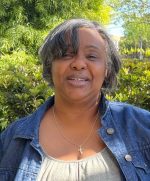
Alona Kashanian, DPM

Paul R. Scherer, DPM


Larry Huppin, DPM


Education/Experience Highlights


  • Graduate of California College of Podiatric Medicine
  • Fellowship in Podiatric Biomechanics
  • Board Certified (ABPOPPM)
  • Adjunct Assistant Professor (CSPM at Samuel Merritt University)
  • Clinical Professor of Podiatric Medicine and Surgery; Western University of Health Sciences / College of Podiatric Medicine
  • Private Practice
  • Lectures nationally at clinical conferences
  • Author of numerous podiatric articles
  • Weekly blog

Approach to Orthotic Consulting 

ProLab uses an evidence-based approach to orthotic therapy. We stay current with the medical literature by continually gathering studies, evaluating them for quality, and then providing you with relevant information so you can provide your patients with more effective orthotic therapy.

An example of this evidence-based approach is our recommendation for treating plantar fasciitis. A 1999 study by Kogler et al. demonstrated that valgus forefoot wedging decreases plantar fascial strain while varus forefoot wedging increases strain. Based on this study, we recommend valgus forefoot wedging on orthoses for plantar fasciitis treatment.
 

Alona Kashanian

Education/Experience Highlights

  • Graduate of California College of Podiatric Medicine (CCPM)
  • Biomechanical/Orthopedic and Sports Medicine Fellowship
  • Board Certified (ABPOPPM)
  • Private Practice 
  • Past Assistant Professor (CCPM)
  • Author of numerous podiatric articles

How do you approach a typical medical consultation?

Our medical consultation provide practitioners with the opportunity to brain storm, discuss biomechanical ideas and theories, as well as have a quick biomechanical review in less than 10 minutes. While discussing a complicated patient with multiple lower extremity pathologies, I encourage the practitioner to target the main mechanical pathology. The practitioner shares a brief overview about the patient with respect to patient's age, weight, overall foot type (planus, rectus, cavus) and resting calcaneal position versus neutral calcaneal position. This quick discussion helps me visualize the pathomechanics and helps me guide the practitioner to write an effective orthotic prescription based on clinical experience and the most current evidence-based medicine.


sd sd sd sd sd sd sd

Home   |   About   |   Products   |   Education   |   Consultation   |   Client Services   |   E-Journal    |   Blog